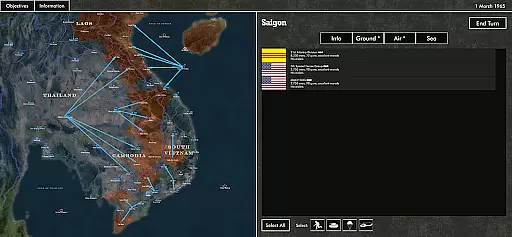
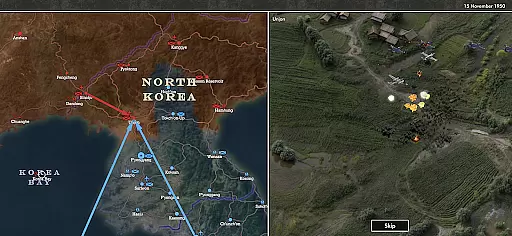
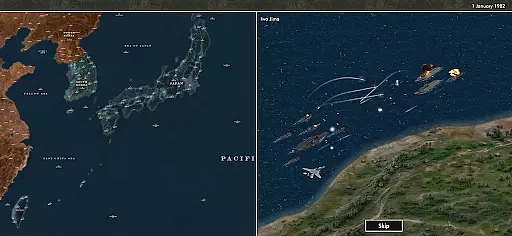
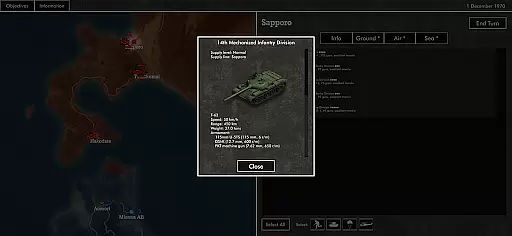
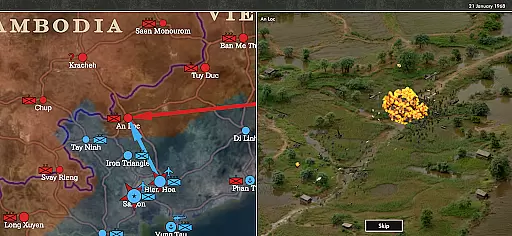
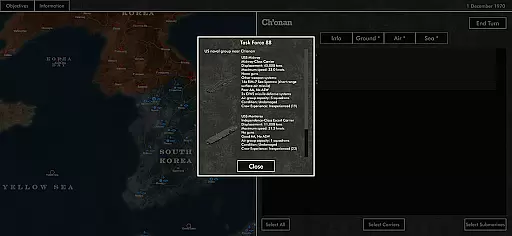
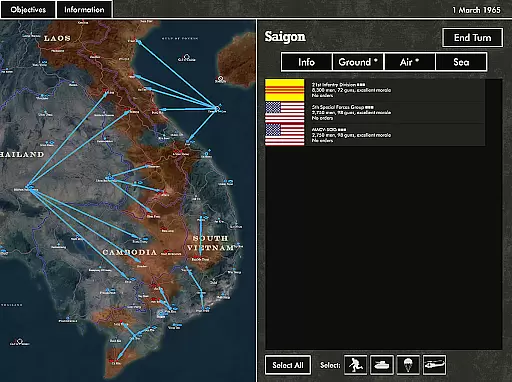
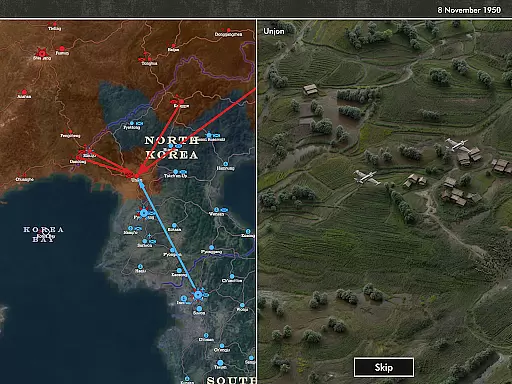
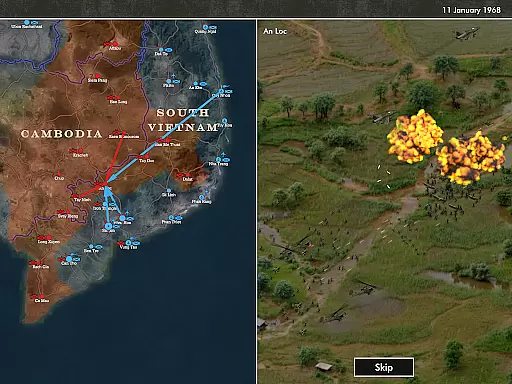
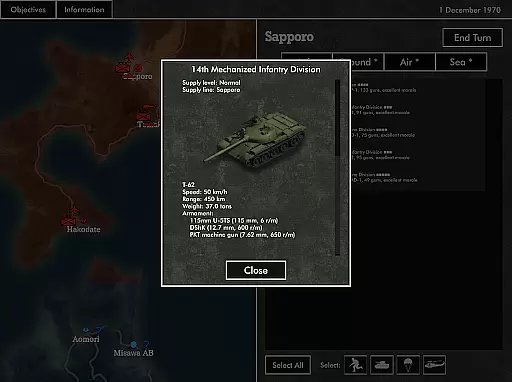
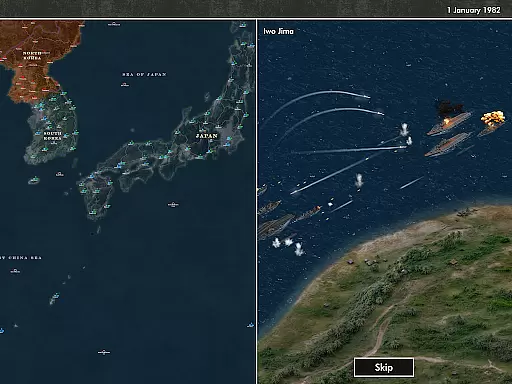
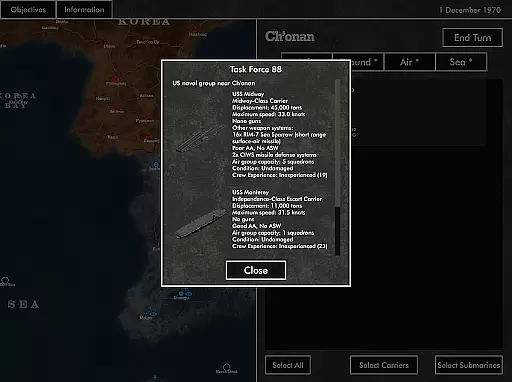
Red Fire is a turn-based strategy game that immerses players in the military conflicts of East Asia from 1950 to 1975. As a commander, you will control land, air, and naval forces across historical wars like the Korean War and Vietnam War, as well as fictional scenarios. With over 500 types of aircraft and warships at your disposal, the game offers deep tactical gameplay powered by realistic Cold War-era combat simulations.
The game features an intelligent AI opponent that adapts its strategies dynamically, ensuring challenging and unique battles every time. Players can also engage in hotseat multiplayer with friends. Red Fire provides extensive content without in-app purchases or ads, offering a premium experience for strategy enthusiasts.
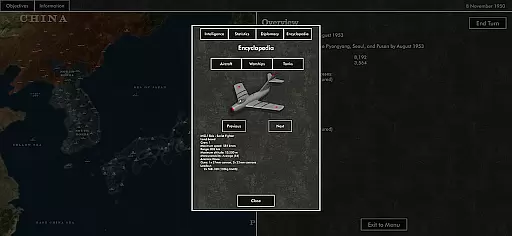
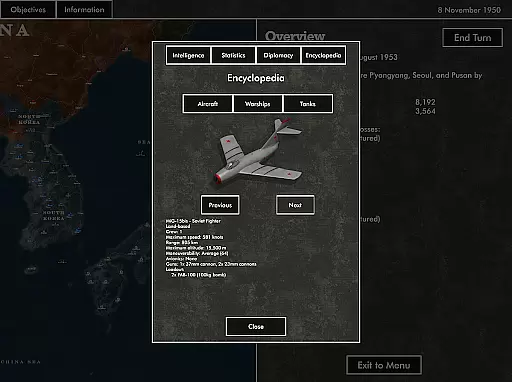
Red Fire stands out with its vast array of units and detailed simulation mechanics. The game includes more than 500 types of aircraft, ranging from biplanes to advanced fighter jets, and over 500 types of naval vessels such as submarines, battleships, and aircraft carriers. These units are modeled with precision, reflecting their real-world capabilities during the Cold War era.
In addition to its rich unit variety, Red Fire incorporates modern military tools like surface-to-air missiles, aerial refueling tankers, missile cruisers, and attack helicopters. These elements add layers of strategic depth, allowing players to execute complex operations. The absence of in-app purchases or ads ensures uninterrupted gameplay, while offline playability makes it accessible anytime, anywhere.
Strategic depth in a wargame refers to the layers of strategy and the complexity of decisions that players must make to succeed. Red Fire excels in this area by offering an intricate simulation of conflicts from 1950-1975 in East Asia, allowing players to command diverse forces across land, sea, and air. The game challenges you with historical and fictional scenarios, including the Korean War and the Vietnam War, where strategic choices significantly affect outcomes.
The decision-chain complexity in Red Fire is evident as players navigate through multi-faceted military operations. With over 500 types of aircraft and warships at your disposal, each mission requires careful planning and execution. You must decide not only on the composition of your forces but also on how to leverage new military technologies like surface-to-air missiles and missile cruisers effectively.
Players benefit from Red Fire's sophisticated AI, which adapts its strategies, ensuring that every decision has consequences. This dynamic battlefield environment encourages players to think critically and adjust their tactics accordingly. Engaging with Red Fire's strategic depth hones your decision-making skills and provides a richly rewarding experience for those who appreciate complex strategy games.
Faction and unit balance are crucial for maintaining fairness and competitiveness in any strategy game. In Red Fire, balance is achieved through meticulous attention to detail in the representation of various military units and factions involved in Cold War-era conflicts. Each faction, whether it be the US, USSR, China, or others, comes with unique strengths and weaknesses that reflect their historical contexts.
The game offers an extensive array of more than 500 aircraft and warship types, each accurately modeled to provide a realistic sense of their capabilities and limitations. Players will find that biplanes, multirole fighter jets, submarines, battleships, and aircraft carriers all have roles that contribute to a balanced and immersive gameplay experience. The introduction of advanced tools such as air-to-air refueling tankers and attack helicopters adds another layer to this equilibrium.
By ensuring that no single unit or faction dominates the game, Red Fire delivers an engaging experience where strategic prowess determines victory. Players can enjoy both single-player campaigns against a challenging AI and hotseat multiplayer modes, knowing that they compete on equal footing. This commitment to balance makes Red Fire stand out among strategy games set in the period of 1950-1975.
Deep strategic gameplay
Realistic combat simulation
No in-app purchases
Offline playability
Dynamic AI opponent
Steep learning curve
Complex for casual gamers
Limited visual polish
Hotseat-only multiplayer
Historical focus may limit appeal
The Ultimate Turn Based WWII Strategy Experience On Phone and Tablet
 4.70
4.70
Lead epic space marines in a rts galaxy full of sci fi offline strategy games!
4.40
Build a village of kittens and bring them to the moon!
4.60
The original version of Baldi's Basics® - A horror, edutainment parody game
4.20
Merge to upgrade! An innovative strategy war game! Join with us in this Top War
3.90
Serve delicious cookie sundaes on the go in Papa's Scooperia To Go!
4.60
Epic tactics and massive battles in the campaign for history’s greatest empire.
4.70
Craft refreshing paletas and ice pops in Papa's Paleteria To Go!
4.70
An MMO Wargame by the Rise of Kingdoms Team
4.50
Slice and serve delicious sushi in Papa's Sushiria To Go!
4.60
Select Monkey Warriors! Win This Brutal Banana War!
4.60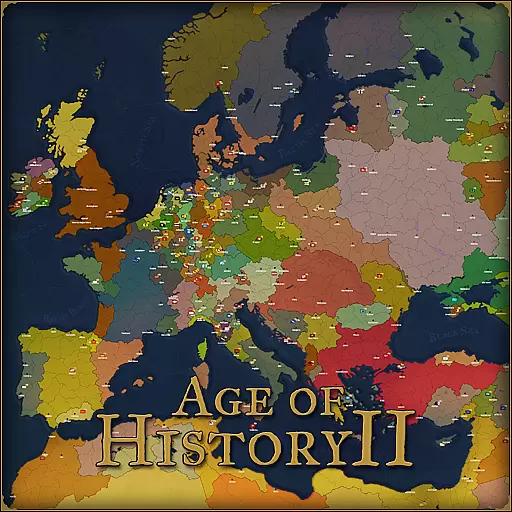
AoH2 is a grand strategy wargame that is simple to learn yet hard to master.
4.50
Race against other players to explore Valhalla and conquer Midgard!
4.50
New Maya Civilization!
4.50
Create delicious coffee drinks and cannoli in Papa's Mocharia To Go!
4.50
A beautifully hand-crafted real-time micro strategy with Vikings.
4.40
Beat the summer heat in Papa's Freezeria HD!
4.30
Bake and decorate delicious cupcakes on the go!
4.30
Roguelike fusion of TD, puzzles and board game ?
4.10


User Reviews