

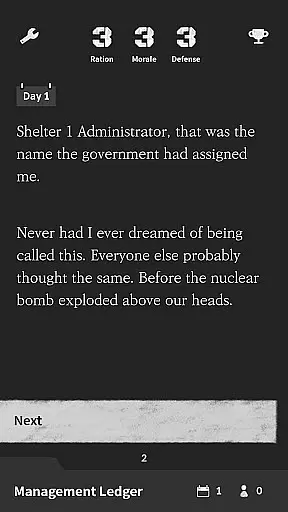
SEOUL 2033: Shelter is a simulation game set in a post-apocalyptic Seoul following a nuclear explosion. As the administrator of Shelter 1, your primary responsibility is managing the shelter's survival through strategic decision-making. The game challenges players to make critical choices about who stays or leaves the shelter, directly impacting its future.
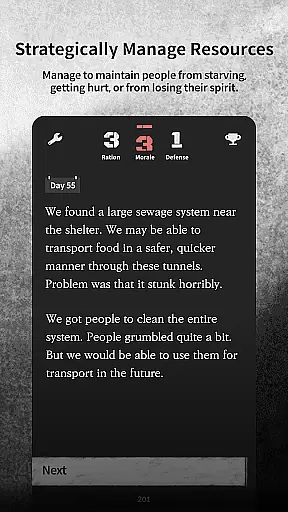
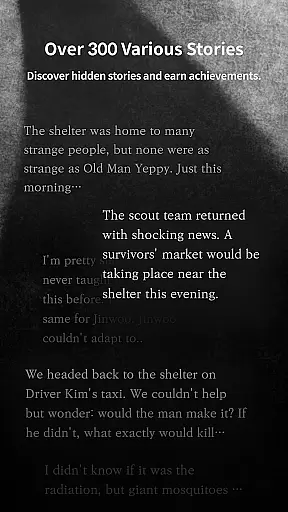
The gameplay revolves around three essential resources: Ration, Defense, and Mentality. Players must ensure inhabitants do not starve, get injured, or lose hope. With over 300 unique stories and 25 distinct characters, each playthrough offers new experiences and outcomes. Additionally, revisiting familiar faces from the original SEOUL 2033 enriches the narrative depth, providing both nostalgia and fresh perspectives.
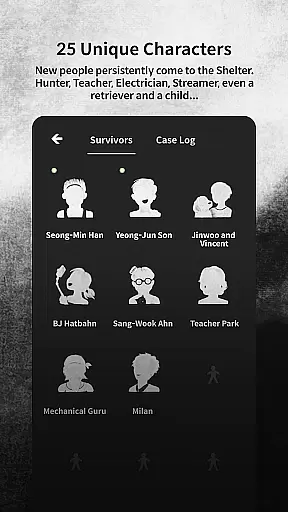
SEOUL 2033: Shelter stands out with its deep storytelling and character-driven gameplay. The game features never-ending choices where every decision significantly affects the storyline and shelter status. Players encounter various characters such as hunters, teachers, electricians, and even animals like retrievers, each bringing unique background stories that enrich the shelter's dynamics.
Resource management is another highlight, requiring players to balance food supplies, defense mechanisms, and mental health. This strategic layer adds complexity and engagement. Moreover, the inclusion of voice-over guides enhances accessibility, allowing more players to immerse themselves in this richly crafted world. With over 300 diverse stories and multiple endings, replayability is virtually limitless, offering gamers countless hours of immersive entertainment.
In 'SEOUL 2033 : Shelter', the economic system is a cornerstone of survival. As the administrator, you must navigate the complexities of rationing, defense, and morale to ensure the shelter's longevity. The game intricately weaves these elements into a dynamic feedback loop that responds to your every decision.
Each choice you make, from who to admit into your shelter to how resources are allocated, sends ripples through this economic ecosystem. This creates a constantly evolving narrative where scarcity or abundance of resources can alter the storyline, offering a rich tapestry of gameplay experiences.
The true value for players lies in the deep strategic layer this system adds to the game. By having to consider long-term implications of their choices, users gain a sense of accomplishment and investment in the shelter's fate, making each playthrough a unique lesson in resource management and leadership.
Resource management in 'SEOUL 2033 : Shelter' is a delicate balancing act. Players must juggle Ration, Defense, and Mentality to keep their shelter inhabitants alive and well. Each resource is crucial; neglecting one can lead to dire consequences, creating an engaging challenge for players.
The game offers a variety of characters with unique skills that impact resource management. Deciding whom to accept into your shelter not only affects the story but also your strategic position. Characters such as the Hunter or Electrician bring specific advantages that could turn the tide in your favor.
This balance ensures that no two gaming sessions are alike, providing immense replayability. Gamers will find themselves fully immersed in a multifaceted strategy experience where adaptability and foresight become their most valuable assets in securing the future of their virtual community.
Engaging storyline
Unique characters
Strategic gameplay
Voice-over support
High replay value
Complex for beginners
Limited tutorial
Occasional bugs
Slow progression
Repetitive tasks

Pro Wrestling Team Management Sim, Face off with fearsome foes!
 4.50
4.50
ASMR Cooking Minigames to calm & relax
4.50
Draw the image and color in the spaces to create the complete picture
4.50
Change lives in Flop House: Become the idle manager of a homeless shelter!
4.50
Explore the open world and run your business empire in this real life simulator!
4.50
The ultimate off-roading game!
4.60
Alleviate your mind in trippy and soothing experience with stunning visuals
4.90
Dig deep into a huge collection of vehicles and driving situations
4.40
Cause chaos as a mischievous kitty in this hilarious cat simulator!
4.50
Mystical Mixing: little alchemy meets tiny wings spiced with potion permit magic
4.80
Can you infect the world?
4.70
Multiverse in shambles? There's a goat for that. Play on mobile now!
4.60
Experience the sometimes hectic life of a Freddy Fazbear's Pizzeria franchisee.
4.60
Laugh, play, take care, learn and relax with the cutest virtual friend
4.50
Cook in the kitchen, Serve food: Manage the dash fever in my restaurant games!
4.20
Build your base, fight zombies, and survive the post-apocalyptic war!
4.20
Manage the Logging Factory and Build an Idle Lumber Empire in the clicker game
3.90
I made a game for a certain kind of person. To hurt them.
3.30
Survive, explore, and invent wild machines in a world ruled by robots!
4.4


User Reviews