

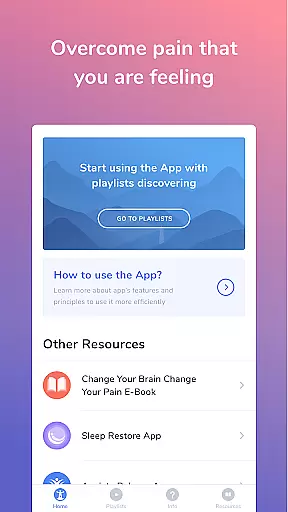
Overcoming Pain based on EMDR is a specialized mobile application designed to help users manage chronic pain and severe stress through innovative techniques derived from neuroscience research. Developed by Mark Grant, an esteemed Australian psychologist and researcher, the app incorporates evidence-based strategies that have been scientifically studied for their effectiveness in pain management.
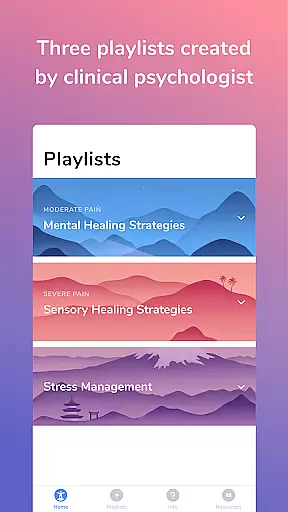
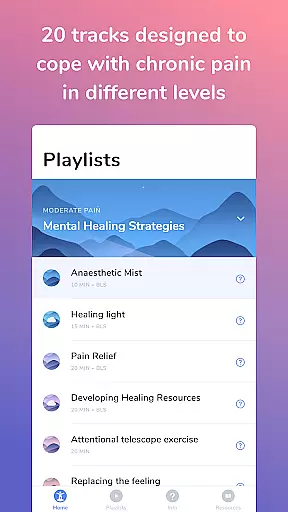
The app features three distinct playlists, each targeting different aspects of pain relief and stress reduction. The Mental Healing Strategies playlist focuses on alleviating mild to moderate chronic pain, while Sensory Healing Strategies provides support when users are too fatigued or distressed to engage with more active techniques. Additionally, the Stress Management playlist helps reduce overall stress levels, which can exacerbate chronic pain conditions. These playlists work synergistically to offer comprehensive support for users seeking relief.
This application is particularly beneficial for individuals suffering from chronic pain who are looking for alternative methods to complement traditional treatments. By utilizing bilateral stimulation (BLS) derived from Eye Movement Desensitization and Reprocessing (EMDR), the app aims to alter physical, emotional, and cognitive processes associated with chronic pain, offering users a unique tool for managing their symptoms effectively.
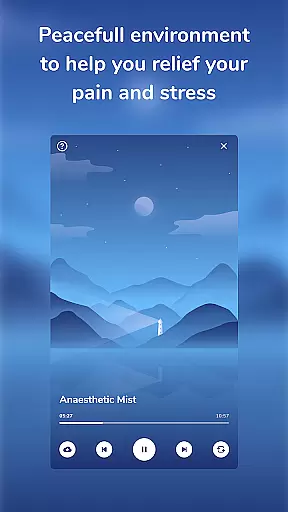
One of the standout features of Overcoming Pain based on EMDR is its incorporation of bilateral stimulation (BLS), a technique rooted in EMDR therapy. This feature works in conjunction with focused attention to modify the physical, emotional, and cognitive processes linked to chronic pain and stress. Users can experience this through specially designed audio tracks that should ideally be listened to using headphones for optimal results.
The app includes three carefully curated playlists: Mental Healing Strategies, Sensory Healing Strategies, and Stress Management. Each playlist serves a unique purpose; Mental Healing Strategies targets mild to moderate pain, Sensory Healing Strategies supports users during periods of heightened distress, and Stress Management aids in reducing overall stress levels. These playlists are designed to complement one another, providing a holistic approach to pain management.
In addition to its core functionalities, the app offers educational resources, including articles about EMDR, chronic pain, and the healing effects of bilateral stimulation. Users can also access information about Mark Grant's book, Change Your Brain, Change Your Pain, which delves deeper into overcoming chronic pain. This combination of practical tools and educational content makes the app a valuable resource for those seeking to understand and manage their pain better.
Personalized planning in the Overcoming Pain based on EMDR app offers tailored strategies to manage chronic pain and stress effectively. The app provides three distinct playlists, each designed with specific goals to address varying levels of discomfort and stress.
The Mental Healing Strategies playlist focuses on alleviating mild or moderate chronic pain, while Sensory Healing Strategies are crafted for times when pain or distress is too overwhelming for cognitive strategies. Additionally, the Stress Management playlist aims to reduce overall stress, which can exacerbate chronic pain.
These personalized plans ensure that users can find relief regardless of their current state, promoting a comprehensive approach to pain management. By integrating bilateral stimulation derived from EMDR, the app aids in changing physical, emotional, and cognitive processes associated with chronic pain.
Users benefit from a flexible and adaptive plan that evolves with their needs, ensuring continuous support and improvement in their condition over time.
Progress visualization in the Overcoming Pain based on EMDR app allows users to see tangible improvements in their chronic pain and stress levels. Through consistent use of the app's playlists, users can track reductions in pain and stress, providing motivation and reassurance.
The app's design includes complementary playlists that work together to bring pain under control and maintain lower stress levels. For instance, regular listening to Stress Management tracks helps decrease pain-related activity in the body and brain, offering a clear visualization of progress.
By engaging with the app's resources such as articles on EMDR and chronic pain, users gain deeper insights into their healing journey. This educational component reinforces the visualized progress by explaining the science behind the strategies used.
Overall, progress visualization empowers users by showcasing measurable outcomes, encouraging continued use and trust in the app's methods for managing chronic pain and stress.
Scientifically-backed techniques
Comprehensive pain management
User-friendly interface
Educational resources included
Convenient mobile access
Requires headphone use
Limited to chronic pain
No live support
Premium content costs
Varied user results
The simplest way to track your 21 Day Program containers, exercises, and water.
 4.50
4.50
a fun app full of surprises :)
4.70
Enjoy the Gluten Free living with the best app. SCAN the barcodes & SEARCH.
3.60
Beauty Care, Makeup & Skin Care Scanner | Pregnancy App For A Mom | Healthy Baby
5.00
Histamine intolerance, low FODMAP diet and irritable bowel syndrome (IBS)
4.00
Show your support for the development of FitNotes - Gym Workout Log
4.90
Monitor, analyze, track, and convert blood sugar & help you control diabetes.
4.10
Make sense of your health data.
3.80
Mood journal, habits, self-care tracker, self-love
4.90
App to stop smoking slowly or now with a motivational badges and helpful tips
4.80
Easy reconstitution calc for mixing peptides and creating protocols
4.70
Walk. Earn: Get rewarded for every step! Walk, move, and earn real rewards.
4.70
Get lasting results with Chair Yoga, Wall Pilates, and Walking workouts!
4.60
The Crunch Mobile app - Find a gym, manage favorites, reserve & cancel classes.
4.60
See what's really going on inside your head! Real time EEG graphs from your Muse
4.40
Grow with self-tests and personal routine.
4.30
Your personal BP tracking companion, focus on helping you achieve wellness goal.
4.10
beat yesterday.
4.00
Focus on BP & Health
3.80


User Reviews